About the Book
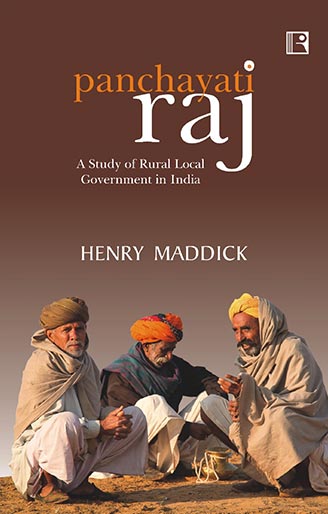
This book, as stated in its subtitle, is concerned with rural local government in India. Panchayati Raj is playing an important role in promoting social change, economic development and the intelligent administration of representative government. It is vital for India that its rural local government shall be both democratic and effective because its functions include most of the development activities – such as agriculture, rural industry, family planning, water and irrigation, rural roads, warehouses and markets, finance – as well as the complementary and intertwined functions of education, health, sanitation and housing.
The study falls into three parts. The first is an introduction for those to whom administration and local government in India are new fields of study. This takes essentials of the earlier systems of local administration and local government which have strongly influenced panchayati raj. The system or more accurately, systems as there are some dozen approaches in the different states – is described in the second part. This section of the book provides information about the essential components of any local government system – electoral systems, council organization, staffing, finance, areas and so on. The chapter titles indicate the extent of the coverage. The book ends with a discussion of some of the more important problems and possible contributions to their solutions.
The book will not only interest students who are keen to understand the nature of local government in rural areas, but also the many in India whose concern is not academic, but very practical – a concern arising from their having to live with the system, to make it work.
Contents
Part One: The Background
1. Introduction: The system of panchayati raj, the state of the people
2. Local Government before Independence
3. The Tradition of the Village Community
4. Constitutional and Other Pressures
5. The Development Programme
6. The Balvantray Mehta Report
Part Two: The System
7. Structure
8. Composition and Election of Councils
9. Functions
10. Finance
11. Staffing
12. The Committee System
13. Relationship with other Institutions
14. Politics and Panchayati Raj
Part Three: Reflections
15. Structure and Organisation of Local Government
16. Relationships with Government
17. Financial Problems
18. People and Panchayati Raj
19. Supervision and Guidance
20. Staffing
21. Conclusions
About the Author / Editor
Henry Maddick was appointed in 1950 to a Lectureship in Public Administration in the University of Birmingham from where his career developed. His main academic interests lay in local government and development studies. Creation of the Institute of Local Government Studies was his major achievement to turn his vision into reality. Founded in 1964, it came to be known as INLOGOV with Professor Maddick as its Director