Jaipur • New Delhi • Bengaluru • Guwahati • Kolkata
James Gordon Finlayson
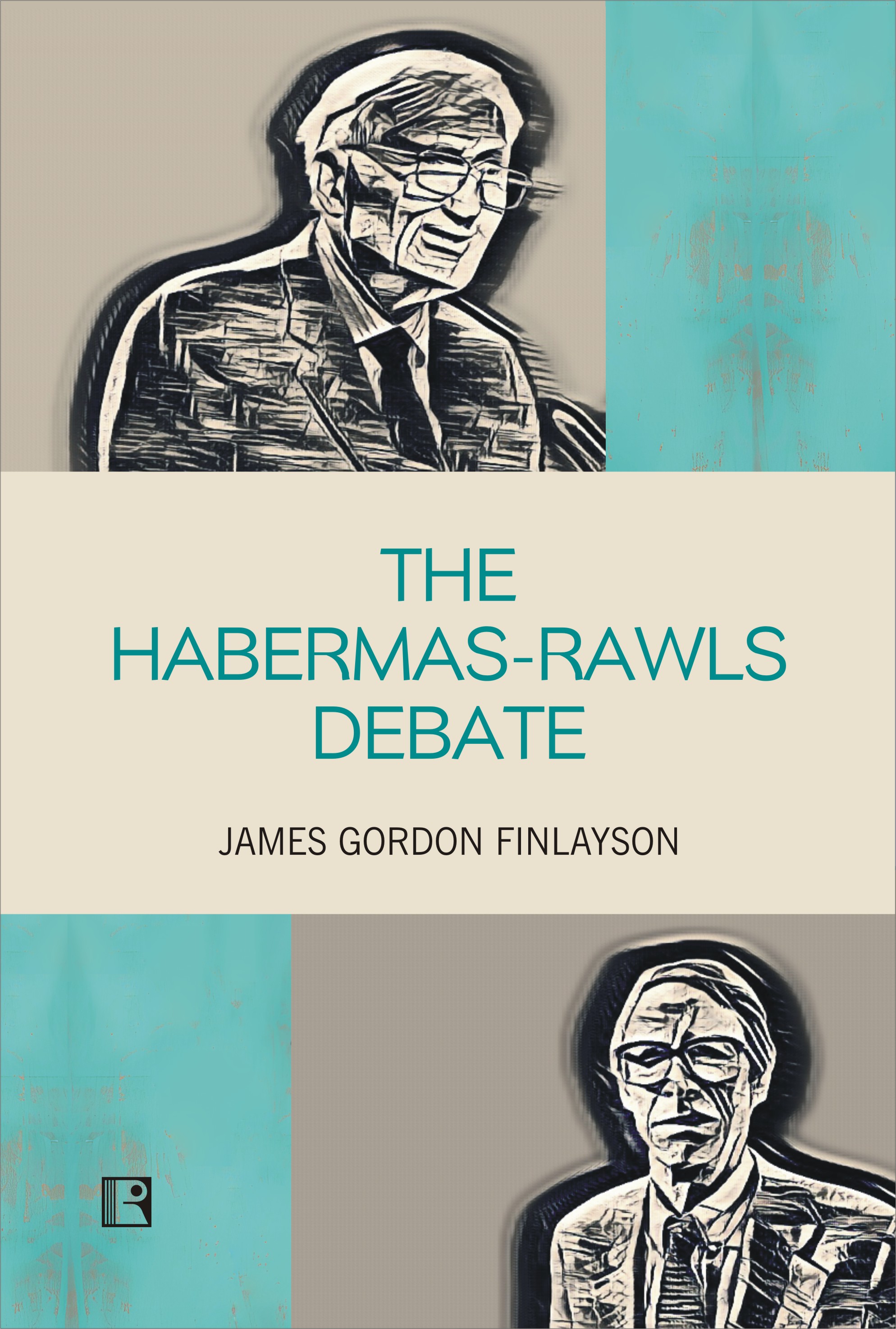
Jürgen Habermas and John Rawls are perhaps the two most renowned
and influential figures in social and political philosophy of the second half
of the twentieth century. In the 1990s, they had a famous exchange in the
Journal of Philosophy. Quarreling over the merits of each other’s accounts of
the shape and meaning of democracy and legitimacy in a contemporary society,
they also revealed how great thinkers working in different traditions read–and
misread–one another’s work.
In this book, James Gordon Finlayson examines the Habermas-Rawls
debate in context and considers its wider implications. He traces their dispute
from its inception in their earliest works to the 1995 exchange and its
aftermath, as well as its legacy in contemporary debates. Finlayson discusses
Rawls’s Political Liberalism and Habermas’s Between Facts and Norms,
considering them as the essential background to the dispute and using them to
lay out their different conceptions of justice, politics, democratic
legitimacy, individual rights, and the normative authority of law. He gives a
detailed analysis and assessment of their contributions, assessing the
strengths and weaknesses of their different approaches to political theory,
conceptions of democracy, and accounts of religion and public reason, and he
reflects on the ongoing significance of the debate. The Habermas–Rawls Debate
is an authoritative account of the crucial intersection of two major political
theorists and an explication of why their dispute continues to matter.
Introduction: Much Ado About Nothing
I. The
Early Debate
1. Two
Nonrival Theories of Justice
2. Habermas's
Early Criticisms of Rawls
II. Habermas's
and Rawls's Mature Political Theories
3. Habermas's
Between Facts and Norms
4. Rawls's
Political Liberalism
III. The Exchange
5. Habermas's
"Reconciliation Through the Public Use of Reason"
6. Rawls's
"Reply to Habermas"
7. "'Reasonable'
Versus 'True'": Habermas's Reply to Rawls's "Reply"
IV. The
Legacy of the Habermas–Rawls Debate
8. Religion
Within the Bounds of Public Reason Alone
James
Gordon Finlayson is reader in philosophy and director of the
Centre for Social and Political Thought at the University of Sussex. He is the
author of numerous articles on post-Kantian philosophy and critical theory, as
well as Habermas: A Very Short Introduction (2005), and the editor of Habermas
and Rawls: Disputing the Political (2011).
Richard Sisson and Stanley Wolpert (eds)
Your cart is empty.