Jaipur • New Delhi • Bengaluru • Guwahati • Kolkata
Shetal Barodia
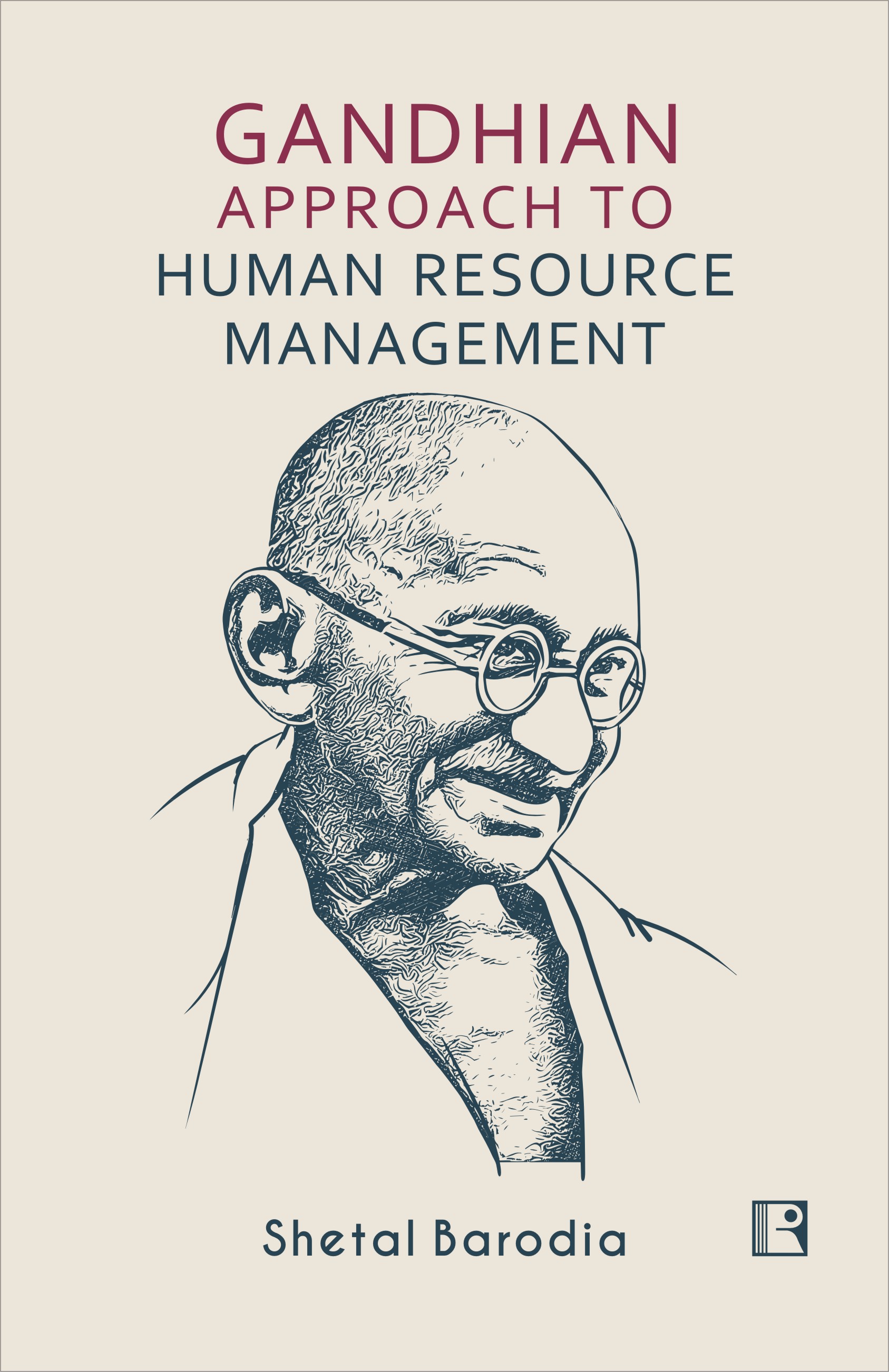
In the pursuit of universal harmony and development, human
relations stand as an indispensable cornerstone. Without the active involvement
of human resources in various capacities, no development endeavour can truly
thrive. The harmony of human relations is at the heart of societal prosperity
and workplace efficacy. This enduring belief, advocated by Mahatma Gandhi a
century ago, resonates deeply even in the contemporary landscape. Gandhi’s
steadfast advocacy for harmonious human relations permeates the fabric of life
and continues to serve as a timeless source of inspiration.
This book heralds a fresh perspective on Human Resource
Management, introducing the profound concept of Gandhian Humanism. At its core,
it advocates for the creation of peaceful and collaborative workplaces,
underpinned by principles of non-violence and positive relationships. Within
these pages, readers will embark on a journey that delves into essential topics
such as employee involvement, shared ownership, the pursuit of mutually
beneficial solutions, and the art of resolving conflicts through negotiation
and mediation.
Designed to cater to a diverse audience including students,
educators, business leaders, and trainers, this book emerges as a vital
resource for cultivating harmonious and productive workplaces. With its blend
of theoretical insights and practical strategies, it stands as a beacon guiding
individuals and organizations toward the realization of Gandhi’s vision of a
world characterized by unity, understanding, and collective progress.
1 Issues in
Human Resource Management
2 Concept of
Human Resource Management
3 History of
Conceptual Development
4 History of the
Trade Union Movement
5 Models of
Human Resource Management
6 Gandhian Model
of HRM
Shetal
Barodia, an Associate Professor at the Department of Lifelong Learning,
Gujarat Vidyapith, Ahmedabad, brings over 20 years of expertise in Human
Resource Management, Entrepreneurship Development, Home Science Extension &
Communication, and NGO Management. She earned her Ph.D. from Gujarat
University, Ahmedabad, and completed her foundation studies at The Maharaja
Sayajirao University, Baroda. Dr. Barodia has authored three books, contributed
chapters to various publications, and penned over 25 articles in national and
international journals. Her dedication extends to spearheading research
projects, sharing insights at conferences, and actively contributing to
university activities, showcasing her commitment to academic excellence and
institutional progress.


Richard Sisson and Stanley Wolpert (eds)
Your cart is empty.