Jaipur • New Delhi • Bengaluru • Guwahati • Kolkata
Bhupinder Singh
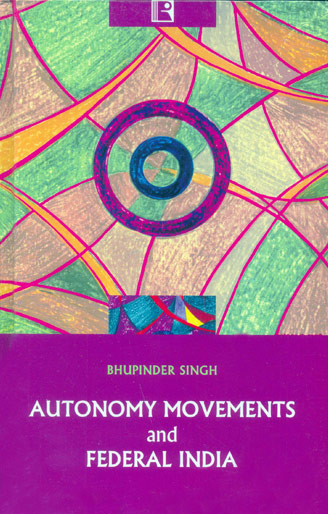
In this book, the Indian Constitution is visualised as an architecturally multi-faceted modern edifice of accommodative versatility. Given the will and capability of political management, the multiplying demands of a tumultuous polity are not difficult of being lodged therein. It is emphasised that realisation of the potential of the now constitutionally-mandated radical panchayat system is essential for a comprehensive harmony of the total architectural design of a federal India.
What lends the book a unique and authentic flavour is the fact that the author has been an active participant in Jharkhand, Bodo and Naga movements on both sides of the divide—officially on the authority’s side but emotionally and morally on the protagonists’ side.
Bhupinder Singh has devoted the best part of his career in the Indian Administrative Service (1956-89) to the cause and study of the weaker sections of the society. During his active service, he made significant contribution to the evolution of policies, strategies, concepts, etc., in tribal affairs generally and tribal development particularly. After retirement, notably, he has been responsible in the main for drafting the reports of three important committees set up by the Government of India: as a member of the Committee on Jharkhand Matters (1990), as chairman of the Three-Members Expert Committee on Plains Tribes of Assam (1992) and as an expert member of the Committee of MPs and Experts for Law on Extension to Scheduled Areas of the Provisions of the 73rd Constitutional Amendment. The three reports have paved the way for a more satisfying configuration and administration of parts of federal India through legislative and administrative action. Currently, he is a member of the Second Commission on Scheduled Tribes and Scheduled Areas appointed by the Government of India recently.
Richard Sisson and Stanley Wolpert (eds)
Your cart is empty.