About the Book
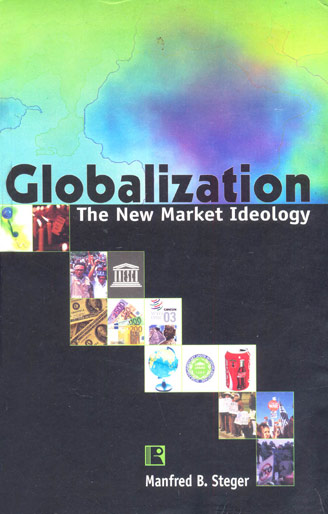
“Globalization: ” “The New Market Ideology” rejects the notion that we find ourselves at the end of ideology and that democracy has won. Instead, Steger argues that the opening decade of the 21st century will constitute a teeming battlefield of clashing ideologies. The chief protagonist is the dominant neoliberal market ideology Steger calls “globalism.” Although globalism constitutes little more than a gigantic repackaging of old laissez-faire ideas, it deserves the label “new market ideology” because its advocates have been able to link their quaint free-market concepts with cutting-edge “global talk.” At the same time, globalism has already encountered serious ideological challenges from both the political left and right. The anti-WTO protests in Seattle and the demonstrations against the IMF and World Bank in Prague are just the opening salvos of the coming battle over the meaning and direction of globalization. After identifying and evaluating the five central claims of globalism—including assertions that “globalization is inevitable” “nobody is in charge of globalization” and “globalization benefits everyone” —Steger offers an overview of the counterclaims made by anti-globalist forces. Since this ideological struggle will deeply influence the crucial political and ethical questions of the new century, this book seeks to provide readers with an understanding of how dominant beliefs about globalization fashion their realities, and that these ideas and values can be changed in a more egalitarian direction.
Contents
About the Author / Editor
Manfred B. Steger is associate professor of politics and government at Illinois State University, and affiliate faculty member of the Globalization Research Center at the University of Hawai’i at Manoa. His academic fields of expertise include ideologies and theories of globalization, comparative political and social theory, theories of nonviolence, and international politics. His most recent publications include “The Quest for Evolutionary Socialism: Eduard Bernstein and Social Democracy” (1997), ” Engels After Marx” (1999), ” Violence and Its Alternatives: An Interdisciplinary Reader” (1999), ” and Gandhi’s Dilemma: Non-violent Principles and Nationalist Power” (2000).