About the Book
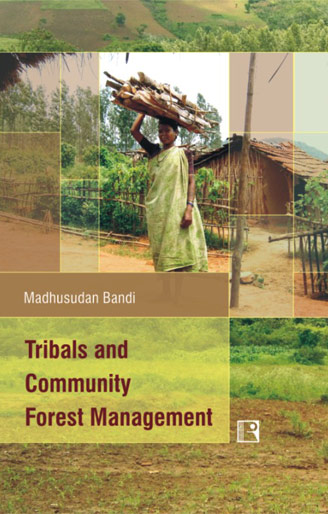
The history of forest governance and policies in India presents an interesting blend of conservation and exploitation of the forests. Notwithstanding several measures taken to prevent depletion of forests in the past, the destruction of forests has continued. This has not only destroyed the traditional institutions of managing forests, but has also caused gross ecological imbalances. The forest policy in India, with its colonial attributes, continues to look upon forest-dependent communities not only as aliens in their own lands ignoring their rights, but even treats them as destroyers of forests. Given this, the concept of community forest management (CFM) appeared towards the end of the twentieth century. But, even after two decades of the introduction of this idea in its present form in India, the outcome appears mixed with sporadic success.
Based on an empirical study undertaken to understand the practicality of the concept of CFM in the lives of the tribals and other forest-dwellers, the author suggests that, in many places, the community managing the forest themselves suffered from multiple handicaps. If lack of awareness and confidence to be on their own after being subjected to suppression for generations were the basic reasons, then the situation is found to be further complicated by intra-community conflicts and leadership deficiency allegedly inflicted upon them by the forest officials at the local level. The study, however, comes up with the possible features and characteristics required in the Indian setting for the success of CFM, in particular, and similar kind of natural resources management institutions, in general.
Contents
1. Introduction
2. Forest Policy from State Control to Community Participation
3. Contextualising Community Forest Management (CFM)
4. Community Participation and Decision-Making in CFM
5. Transparency and Accountability in CFM
6. Determinants to Sustenance of CFM
7. Theoretical Considerations
8. Conclusions: Challenges of CFM
About the Author / Editor
Madhusudan Bandi is a political scientist with specialisation in Development Studies. Besides Ph.D. and M.Phil., he also holds a Degree in Law. Presently, he is an Assistant Professor with the Gujarat Institute of Development Research, Ahmedabad.
He has been a recipient of the Split-Site Commonwealth Scholarship by Association of Commonwealth Universities and the British Council, London, United Kingdom, and the Indian Council of Social Science Research Institutional Doctoral Fellowship for his Ph.D.
His academic experience comprises both teaching and research. He has been associated with various projects at the reputed research institutions like CESS and Livelihoods and Natural Resource Management Institute in Hyderabad. His research interests include decentralised governance, participatory forest management, development concerns of the underprivileged sections in India and current affairs. He has to his credit publications in professional journals and edited volumes.