Jaipur • New Delhi • Bengaluru • Guwahati • Kolkata
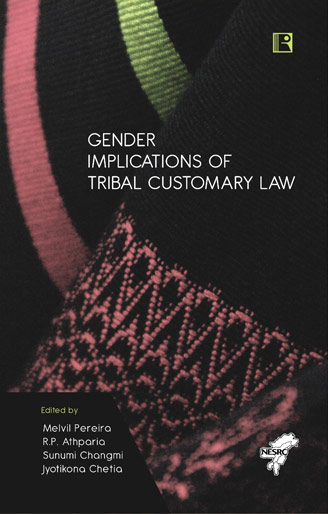
Melvil Pereira, R.P. Athparia, Sunumi Changmi and Jyotikona Chetia (eds)
Part I: Theoretical Perspectives
1. Customary Law, Anthropological Jurisprudence and Gender
Issue: Situating Women of
2. What Do the Gender Ideologies in Khasi and Naga Societies
Reveal? / Lucy Zehol
3. The Hen that Crows: An Insight into the ‘Gender
Implications of Tribal Customary Law’ through Some Literary Works by a Few
North-East Indian Writers / Tejoswita Saikia
4. Tribal Women in
5. Framing Naga Customary Practices through the Lens of
Gender Justice / Dolly Kikon
6. Gender, Customary Laws and Codification: The North-Eastern
Perspectives / Ranga Ranjan Das
7. Negotiating Equality: Endorsing Women’s Rights through Customary
Laws / Shaunna Rodrigues
8. Locating Women in Customary Laws: A Study of Three Tribes
of
9. Status of Women in
Part II: Customary Laws of Some Tribal Communities of
10. Gender Implications of Muklom Matrimonial Laws: Change
and Continuity / Sunumi Changmi
11. Status and Role of Women in Contemporary Nokte Society /
Wanglit Mongchan
12. Women in Hrangkhol Society: A Case Study in Dima Hasao
District / Brajen Bhattacharyya
13. Women as Partners: Insights into Hmar Household Decision-Making
/ Teresa L. Khawzawl
14. Political Power, Culture and Mishing Women: A
Descriptive Review / Jyotishman Taye
15. Women’s Status and Customary Law in Amri Karbi Society: Observations
from the Field / Pinky Barua
16. Role of Women in the Customary Practices of the Paite / H.
Kamkhenthang
17. Gender Implications in Jaintia Customary Practices / P.M.
Passah
18. Can Culture Contribute to Women’s Empowerment? Gender
Equality and Women’s Rights in a Matrilineal Society / M. Sasikumar
19. Property Rights in a Tribal Society: Perspectives from
the Khasi Matrilineal Society / S. Hayong
20. Status of Mizo Women and Land Related Customary Laws / Lalneihzovi
21. Women and Family in Naga Society / Toli Achumi
22. Ao Women and Village Politics: Gender Implications of
Tribal Customary Laws / Limatula Longkumer
23. Customary Laws and Traditional Practices of the Pochury
Tribe of Nagaland / Thoshusie Katiry
Melvil Pereira is Director at North Eastern Social Research Centre, Guwahati, and is a member of Assam State Backward Class Commission. He has specialised in the tribal customary law of North-East India. Having researched on ethnic conflicts, he has co-authored Land Relations and Ethnic Conflicts: The Case of North Eastern India, and Growing Up in a Conflict Zone: Children Surviving Conflict in Tripura, and a sister-text on Manipur.
Rajendra P. Athparia is a Senior Fellow at North Eastern Social Research Centre, Guwahati. He has earlier worked for the Anthropological Survey of India, eventually becoming the Head of Office of its regional centre in Shillong. He is a member of Juvenile Justice Board, Kamrup (Rural), and the Central Institute of Indian Languages, Mysore.
Sunumi Changmi is currently working at Anthropological Survey of India, Nagpur. She also worked as Research Associate at North Eastern Social Research Centre, Guwahati. Her areas of interests include gender studies, border and migration studies.
Jyotikona Chetia is a Research Associate at North Eastern Social Research Centre, Guwahati. She has done her Master’s in Social Work from Tata Institute of Social Sciences (TISS), Mumbai. Her areas of research interest include child rights, gender studies and migration.
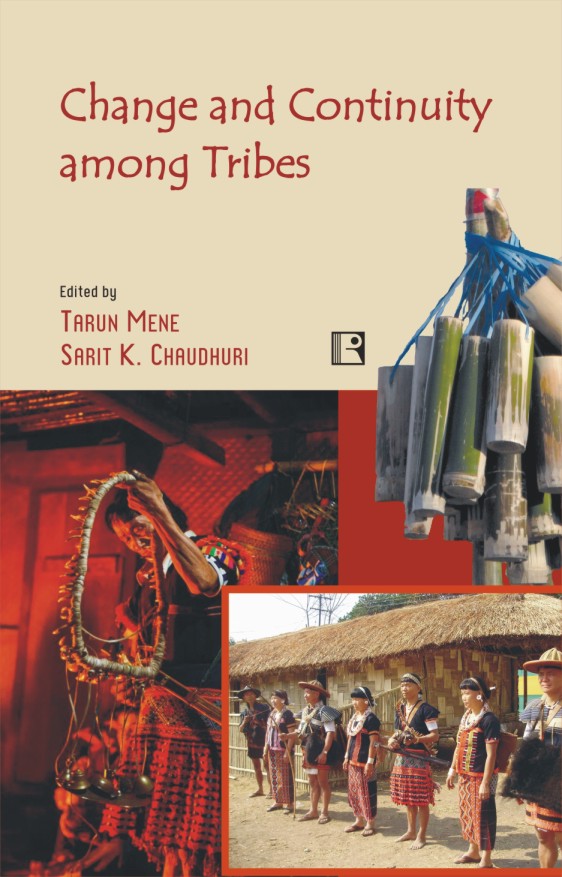
Tarun Mene and Sarit K. Chaudhuri (eds.)
M.C. Behera (ed.)
Your cart is empty.