Jaipur • New Delhi • Bengaluru • Guwahati • Kolkata
Nicholas Gane
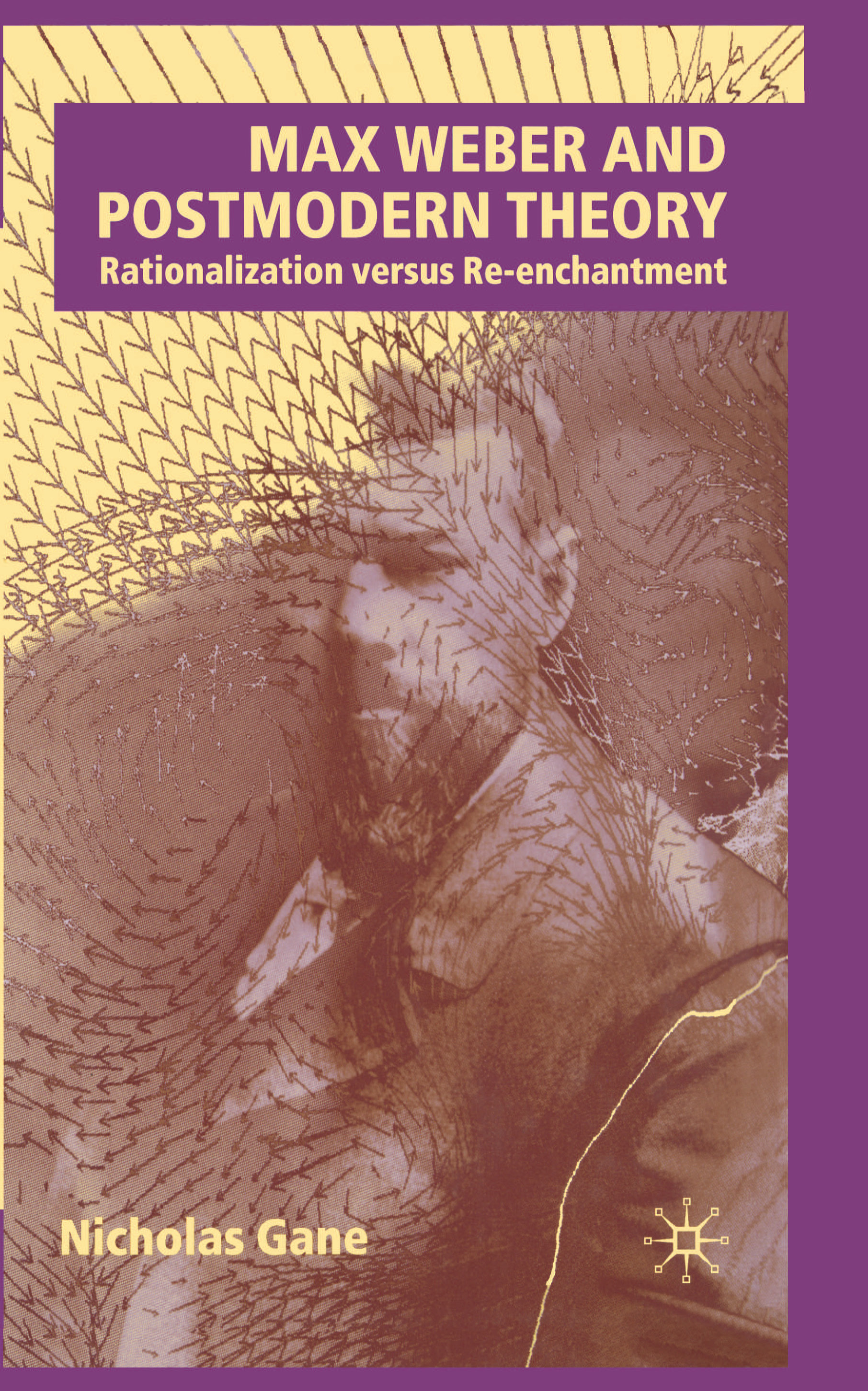
This book explores the contemporary nature of Max
Weber's work by looking in detail at his key concepts of rationalization and
disenchantment. Thematic parallels are drawn between Weber's rationalization
thesis and the critiques of contemporary culture developed by Jean-Francois
Lyotard, Michel Foucault and Jean Baudrillard. It is suggested that these three
'postmoden' thinkers develop and respond to Weber's analysis of modernity by
pursuing radical strategies of affirmation and re-enchantment. Examining the
work of these three key thinkers in this way casts new light both on postmodern
theory and on Weber's sociology of rationalization.
1. Introduction-Max Weber’s Theory and Critique of Rationalization
2. Rationaliz -Introduction Max Weber’s Theory and Critique of Rationalization
2. Rationalization and Disenchantment, I:
From the Origins of Religion to the Death of God
3. Rationalization and Disenchantment, II:
the Differentiation and De-differentiation of Modern Culture
4. The Value of Instrumental Reason:
‘Science as a Vocation’
5. The Ethical Irrationality of the World:
‘Politics as a Vocation’
Weber
and Postmodern Theory: Lyotard, Foucault and Baudrillard
6. Intermediate reflection
7. Weber, Lyotard and the Aesthetic Sphere
8. Weber, Foucault and the Political
Sphere
9. Weber, Baudrillard and the Erotic
Sphere
10. Conclusionation
NICHOLAS GANE is Lecturer in Sociology at the
University of York, UK. His previous publications include The Future of Social
Theory.

Sukhadeo Thorat and Narender Kumar (Eds.)
Your cart is empty.