Jaipur • New Delhi • Bengaluru • Guwahati • Kolkata
Charles H. Powers
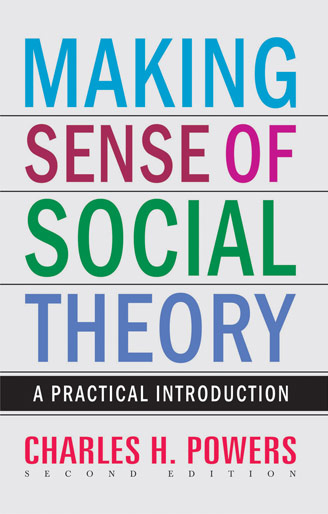
(a) considering the major insights of key thinkers (including Marx, Durkheim, Weber, and Mead, among others),
(b) distinguishing different analytical farmeworks (especially exchange, symbolic interactionism, conflict, and structural-functionalism) in terms of their underlying assumptions, and (c) revealing compelling social science explanatory insights in the form of predictive principles that can be applied in understanding processes of change at work in the social world (from
face-to-face encounters to major historical trends). Sociological theory is applied in ways that make its relevance and power apparent. In reading this book, theory no longer stands divorced from real-world research or practice. Making Sense of Social Theory clearly establishes the pertinence of sociology’s great theoretical insights for all social science researchers and practitioners.
Charles H. Powers is a professor of sociology at Santa Clara University, where he has taught since 1986. His former full-time teaching positions were at Talladega College and at Indiana University. In addition to sociology, Powers has taught business administration and gerontology, and has lectured for executive development programs. His other book publications are Vilfredo Pareto (author), The Transformation of Democracy (editor), Post-Industrial Lives (coauthor) and The Emergence of Sociological Theory (coauthor). Powers has also served as coeditor of Sociological Perspectives, the scholarly journal of the Pacific Sociological Association. He has a special interest in the study of social change and in the analysis of organizational cultures that foster innovation.
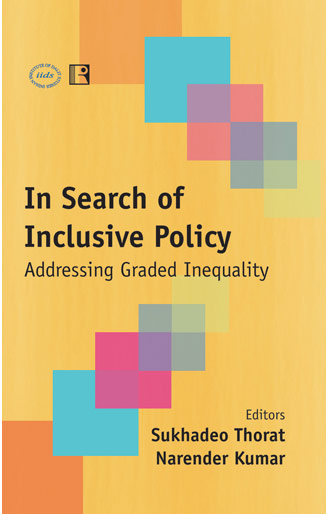
Sukhadeo Thorat and Narender Kumar (Eds.)
Your cart is empty.