Jaipur • New Delhi • Bengaluru • Guwahati • Kolkata
Wendy Harcourt | Karijn van den Berg | Constance Dupuis | Jacqueline Gaybor (Eds)
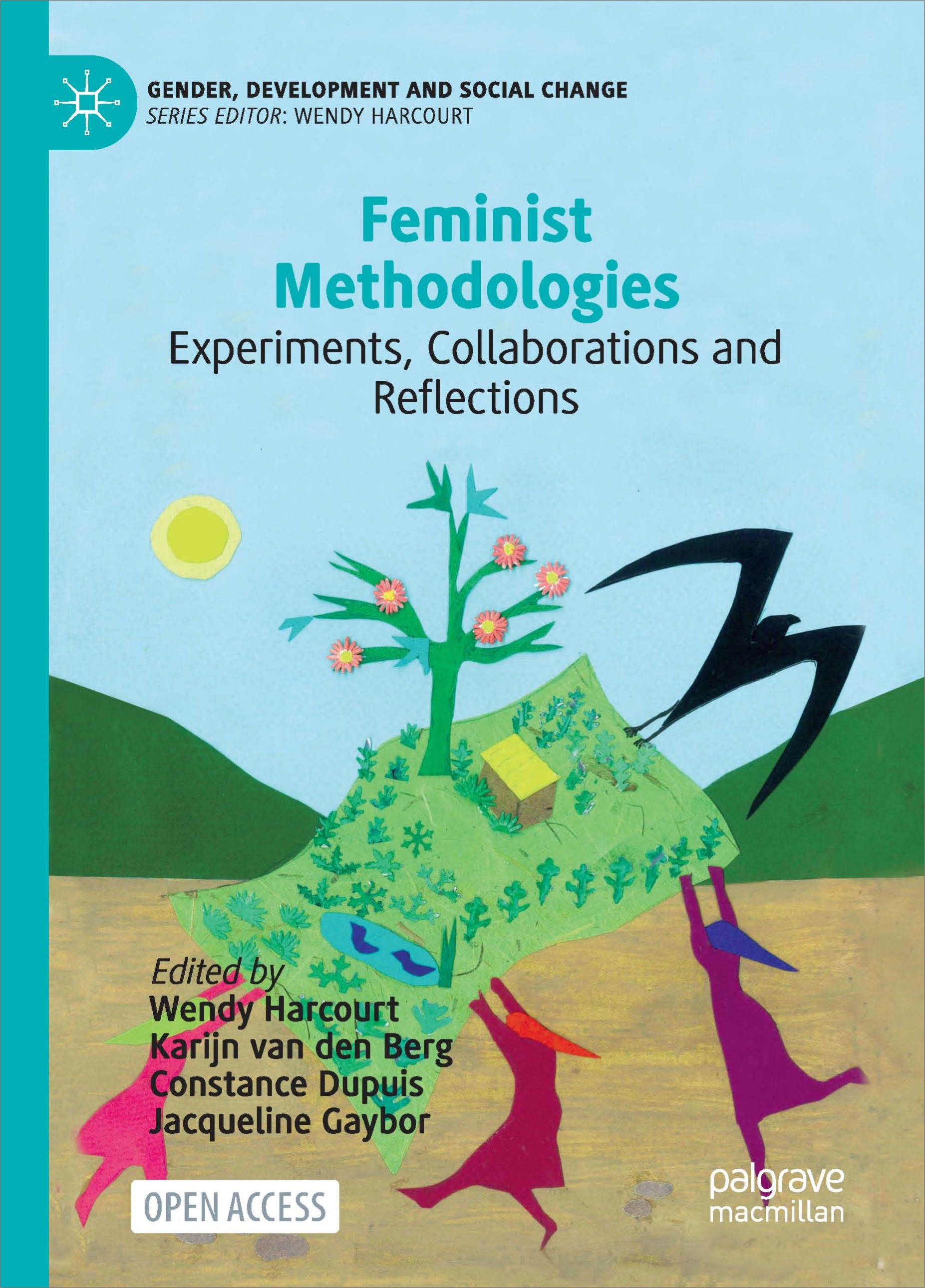
This open access book gives insights into feminist methodologies
in theory and practice. By foregrounding the experiential and embodied nature
of doing feminist research, this book offers valuable tools for feminist
research as a continuous praxis. Emerging from a rich collective learning
process, the collection offers in-depth reflections on how feminists shape
research questions, understand positionality, share research results beyond
academe and produce feminist intersectional knowledges. This book reveals how
the authors navigate theory and practice, candidly exploring the difficulty of
producing knowledge on the edge of academia and activism. From different points
of view, places and disciplinary positions, artistic and creative experiments
and collaborations, the book provides a multi-layered analysis. This book will
be a valuable resource and asset to early career researchers and
interdisciplinary feminist students who can learn more about the doing of
feminist researchfrom realistic, accessible, and practical methodological tools
and knowledge.
1 Introduction:
Feminism as Method—Navigating Theory and Practice by Constance Dupuis, Wendy
Harcourt, Jacqueline Gaybor, and Karijn van den Berg
2 Senses
of Discomfort: Negotiating Feminist Methods, Theory and Identity by Karijn van
den Berg and Leila Rezvani
3 Feminist
Ethics Amid Covid-19: Unpacking Assumptions and Reflections on Risk in Research
by Constance Dupuis
4 Of
Apps and the Menstrual Cycle: A Journey into Self-Tracking by Jacqueline Gaybor
5 Embodying
Cyberspace: Making the Personal Political in Digital Places by Wendy Harcourt
and Ximena Argüello Calle
6 Mulai
Leave—datang Arrive—pulang Return. Working the Field Together: A Feminist
Mother–Son Journey in Yogyakarta, Indonesia by Martina Padmanabhan
7 Methodologies
for Collaborative, Respectful and Caring Research: Conversations with
Professional Indigenous Women from Mexico by Marina Cadaval Narezo ]
8 Immersion,
Diversion, Subversion: Living a Feminist Methodology by C. Sathyamala
9 Embodied
Urban Cartographies: Women’s Daily Trajectories on Public Transportation in
Guadalajara, Mexico by Azucena Gollaz Morán
10 Interconnected
Experiences: Embodying Feminist Research with Social Movements by Daniela
Flores Golfín, Tamara Rusansky, and Fleur Zantvoort
11 Feminist
Storytellers Imagining New Stories to Tell by Rosa de Nooijer and Lillian Sol
Cueva
12 A
Fieldwork Story Told Through Knitting by Mahardhika Sjamsoe’oed Sadjad
13 Scarheart:
Research as Healing by Emily R. O’Hara
14 Epilogue: Learning, Unlearning, and
Relearning by Karijn van den Berg, Constance Dupuis, Jacqueline Gaybor, and
Wendy Harcourt
Wendy Harcourt is Professor of Gender, Diversity and Sustainable
Development at the International Institute of Social Studies of the Erasmus
University Rotterdam. She is Coordinator of the WEGO-ITN “Wellbeing, Ecology,
Gender and Community”Innovation Training Network and series editor of the
Palgrave series on Gender, Development and Social Change. She has written
widely on gender and development, post-development, body politics and feminist
political ecology. Karijn van den Berg holds a Ph.D. in International Politics from
Aberystwyth University, UK. She is an independent feminist researcher who
brings together environmental politics, feminism, activism and relations of
power in her academic and political work, and strives to connect theory,
practice and political organising. Constance Dupuis is a Ph.D. researcher at the International
Institute of Social Studies of the Erasmus University Rotterdam, funded by the
WEGO-ITN “Well-being, Ecology, Gender and cOmmunity”Innovation Training
Network. Her work focuses on ageing and intergenerational well-being from
decolonial and feminist political ecology perspectives. Jacqueline Gaybor holds a Ph.D. on body politics from the
International Institute of Social Studies of the Erasmus University Rotterdam,
The Netherlands. She is a Senior Technical Advisor at Rutgersa Dutch centre of
expertise on sexual reproductive health and rights and she is a lecturer at the
Erasmus University College, of the Erasmus University Rotterdam.

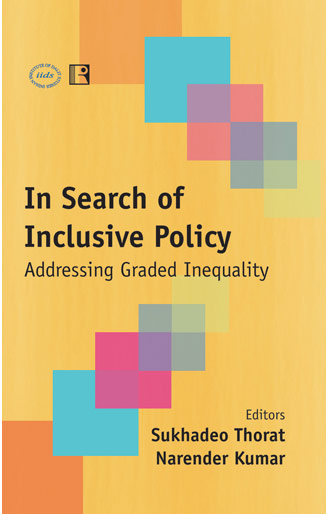
Sukhadeo Thorat and Narender Kumar (Eds.)
Your cart is empty.