
Jaipur • New Delhi • Bengaluru • Guwahati • Kolkata
John G. Peters | Chandrakant Langare (Eds)
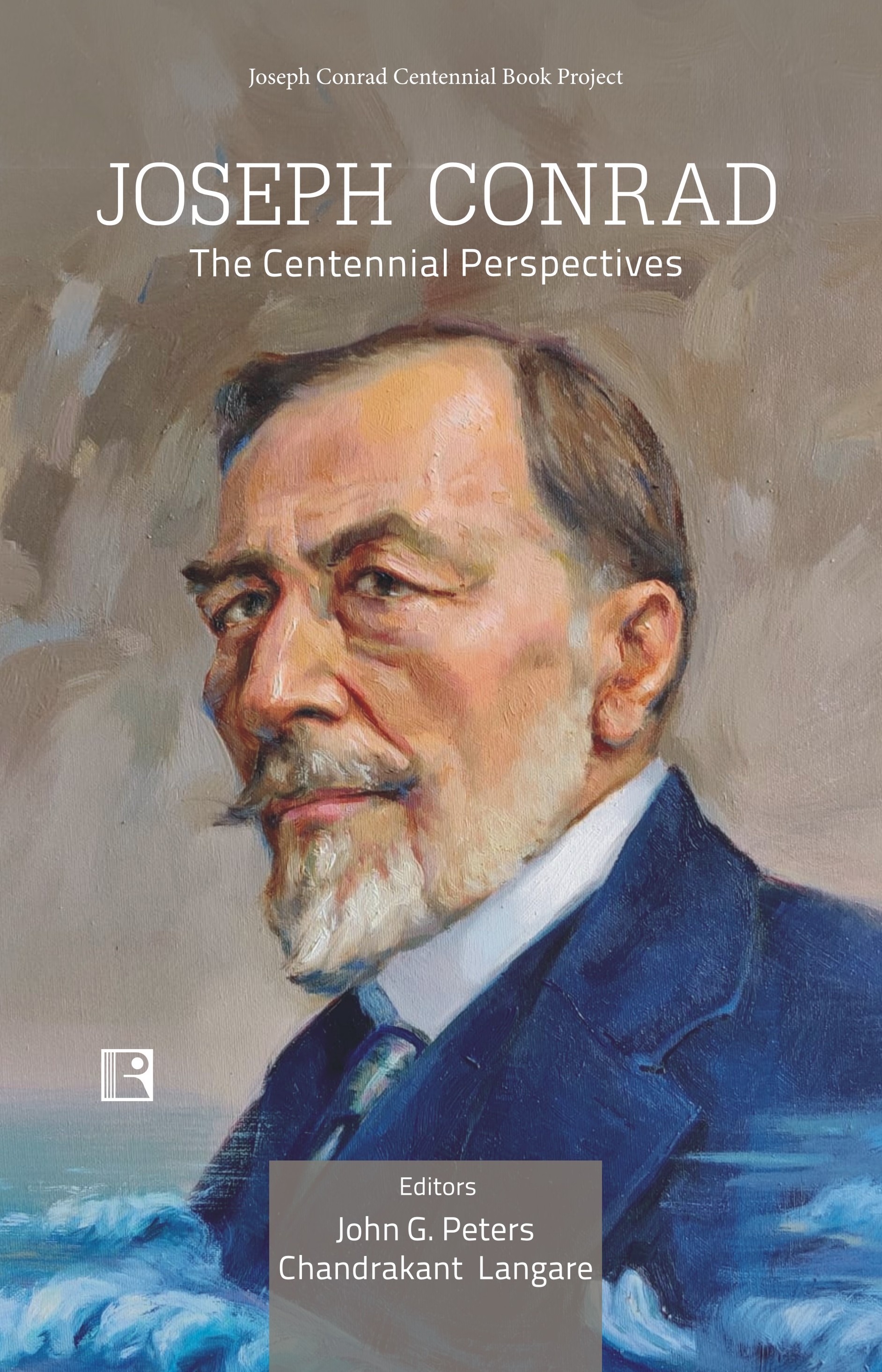
The Joseph Conrad Centennial Book Project is a comprehensive study of Conrad’s works, focusing on the trajectory of shifting perceptions in Conrad’s studies. The hundredth death anniversary of Joseph Conrad is an obvious occasion for a critical revaluation of his literary works. The book includes a critical and insightful introduction by Professor Jeremy Hawthorn and a foreword by Professor Robert Hampson, both esteemed scholars, and serves as a collection of Conradian scholarship and legacy. This collection features essays interconnected by various themes and perspectives from leading experts in Conrad studies. The book offers key concepts for understanding Conrad’s complex fiction and nonfiction, making them accessible without oversimplifying his serious ideas and literary motifs. The purpose of this centennial project is to revisit the extraordinarily complex and diverse works of Joseph Conrad for global readers.
The book serves as a valuable resource through the complex labyrinth of Conrad’s works. It offers critical and theoretical perspectives on Conradian studies. Conrad’s works remain relevant because the world he explored reverberates continually, offering a fresh outlook and understanding as it revisits contemporary issues and discourses. The book offers a thorough overview of recent advancements in Conrad studies and presents a notable collection of scholarly articles on his works. The book provides a different and more complex sense of Conrad’s place in literary history. Scholars and students seeking a current perspective on Conradian studies will find this collection a highly relevant and resourceful book.
John G. Peters, a University Distinguished Professor at the University of the North Texas, USA, is past President of the Joseph Conrad Society of America and current General Editor of Conradiana. His books include Joseph Conrad’s Critical Reception (Cambridge 2013), The Cambridge Introduction to Joseph Conrad (2006), Conrad and Impressionism (Cambridge 2001), A Historical Guide to Joseph Conrad (2010), volume 2 of Joseph Conrad: Contemporary Reviews (Cambridge 2012), and the Norton critical edition of Conrad’s The Secret Sharer and Other Stories (2015). His articles have appeared in such journals as Philosophy and Literature, College Literature, Studies in the Novel, Studies in Short Fiction, and English Language Notes. He has also translated the Japanese Poet Takamura Kotaro’s book The Chieko Poems (Green Integer 2007).Chandrakant Langare is an Associate Professor of English at Shivaji University, Kolhapur, India. He has published articles on Joseph Conrad’s novels, film studies, culture studies, and Dalit studies in edited books and journals. He has published book reviews in journals of national and international repute. He has coedited two Global Interdisciplinary Commemorative Books on Mahatma Gandhi, Reflections on Mahatma Gandhi: The Global Perspectives and Rethinking Mahatma Gandhi: The Global Appraisal (Rawat, 2021), with Prof. Terry Beitzel. He has edited book, Under the Lens: Films, Gender, and Culture with Tripti Karekatti (Crescent, 2023). He has presented papers on Dalit autobiographies and films of Shyam Benegal at PAMLA and NEMLA conferences held at Seattle University, Washington, and Johns Hopkins University, Baltimore, USA. He has presented a paper on early modern Indian poets at the 42nd EMS Conference 2014 at the University of Reading, England. He has presented research papers on Joseph Conrad’s fiction at Roma Tre University, Rome, Italy; the University of Kent, England; and UMCS, Lublin, Poland. In 2023, he was invited by the Mahatma Gandhi Centre at James Madison University, USA as a visiting scholar.
Kriemild Saunders (ed)
Ajay K. Chaubey and Ashvin I. Devasundaram (eds)
Your cart is empty.