
Jaipur • New Delhi • Bengaluru • Guwahati • Kolkata
Rossella Ciocca | Neelam Srivastava (Eds)
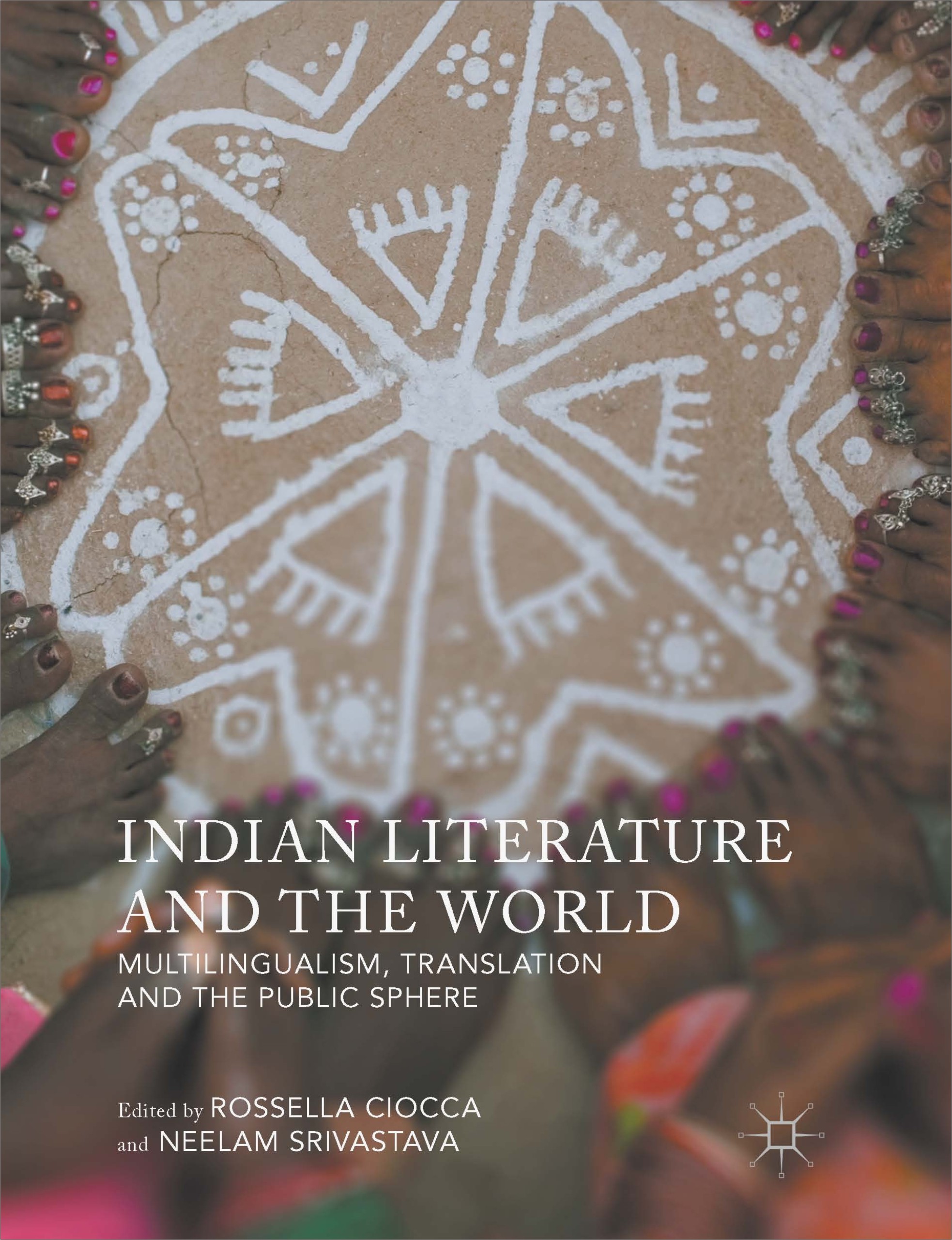
This book is about the most vibrant yet under-studied aspects of
Indian writing today. It examines multilingualism, current debates on
postcolonial versus world literature, the impact of translation on an “Indian”
literary canon, and Indian authors' engagement with the public sphere. The
essays cover political activism and the North-East Tribal novel; the role of
work in the contemporary Indian fictional imaginary; history as felt and reconceived
by the acclaimed Hindi author Krishna Sobti; Bombay fictions; the Dalit
autobiography in translation and its problematic international success;
development, ecocriticism and activist literature; casteism and access to
literacy in the South; and gender and diaspora as dominant themes in writing
from and about the subcontinent. Troubling Eurocentric genre distinctions and
the split between citizen and subject, the collection approaches Indian
literature from the perspective of its constant interactions between private
and public narratives, thereby proposing a method of reading Indian texts that
goes beyond their habitual postcolonial identifications as “national
allegories”.
Introduction: Indian Literature and
the World
Rossella Ciocca and Neelam Srivastava
Part I Comparing Multilingual Perspectives
Pre-Nation and Post-Colony: 1947 in Qurratulain Hyder’s My Temples, Too and Salman Rushdie’s Midnight’s Children Rajeswari Sunder Rajan
Reading Together: Hindi, Urdu, and English Village Novels Francesca Orsini
Choosing a Tongue, Choosing a Form: Kamala Das’s Bilingual Algorithms Udaya Kumar
Part II Enlarging the World Literary Canon: New Voices and Translation
A Multiple Addressivity: Indian Subaltern Autobiographies and the Role of Translation Neelam Srivastava
The Modern Tamil Novel: Changing Identities and Transformations Lakshmi Holmström
The Voices of Krishna Sobti in the Polyphonic Canon of Indian Literature Stefania Cavaliere
Part III Globalized Indian Public Spheres
Resisting Slow Violence: Writing, Activism, and Environmentalism Alessandra Marino
The Novel and the North-East: Indigenous Narratives in Indian Literatures Mara Matta
From Nation to World: Bombay/Mumbai Fictions and the Urban Public Sphere Rossella Ciocca
The Individual and the Collective in Contemporary India: Manju Kapur’s Home and Custody Maryam Mirza
‘Home is a Place You’ve Never Been to’: A Woman’s Place in the Indian Diasporic Novel Clelia Clini
Rossella
Ciocca is Professor of English and Anglophone Literatures at the
University of Naples “l'Orientale”, Italy. She has worked on early modern
literature and culture, Shakespeare, colonial and post-colonial history and
literature. Her recent works include essays on the Partition of India, Mumbai
novels and Tribal literature. She has co-edited Indiascapes: Images and Words
from Globalised India (2008) and Parole e culture in movimento La città e le
tecnologie mobili della comunicazione (2014). She is currently co-editing a new
project with Sanjukta Das Gupta, titled Out of Hidden India: Adivasi Histories,
Stories, Visualities and Performances. Neelam
Srivastava is Senior Lecturer in Postcolonial Literature at Newcastle
University, UK. She is the co-editor of The Postcolonial Gramsci (2012), and
the author of Secularism in the Postcolonial Indian Novel (2008). She has
published widely on contemporary Indian literature, Frantz Fanon, and
anti-colonial cinema. She is completing a book on the cultural history of
Italian imperialism and transnational anti-colonial networks. Between 2008 and
2011, she coordinated an international collaboration funded by the Leverhulme
Trust, entitled “Postcolonial Translation: The Case of South Asia”.
Kriemild Saunders (ed)
Ajay K. Chaubey and Ashvin I. Devasundaram (eds)
Your cart is empty.