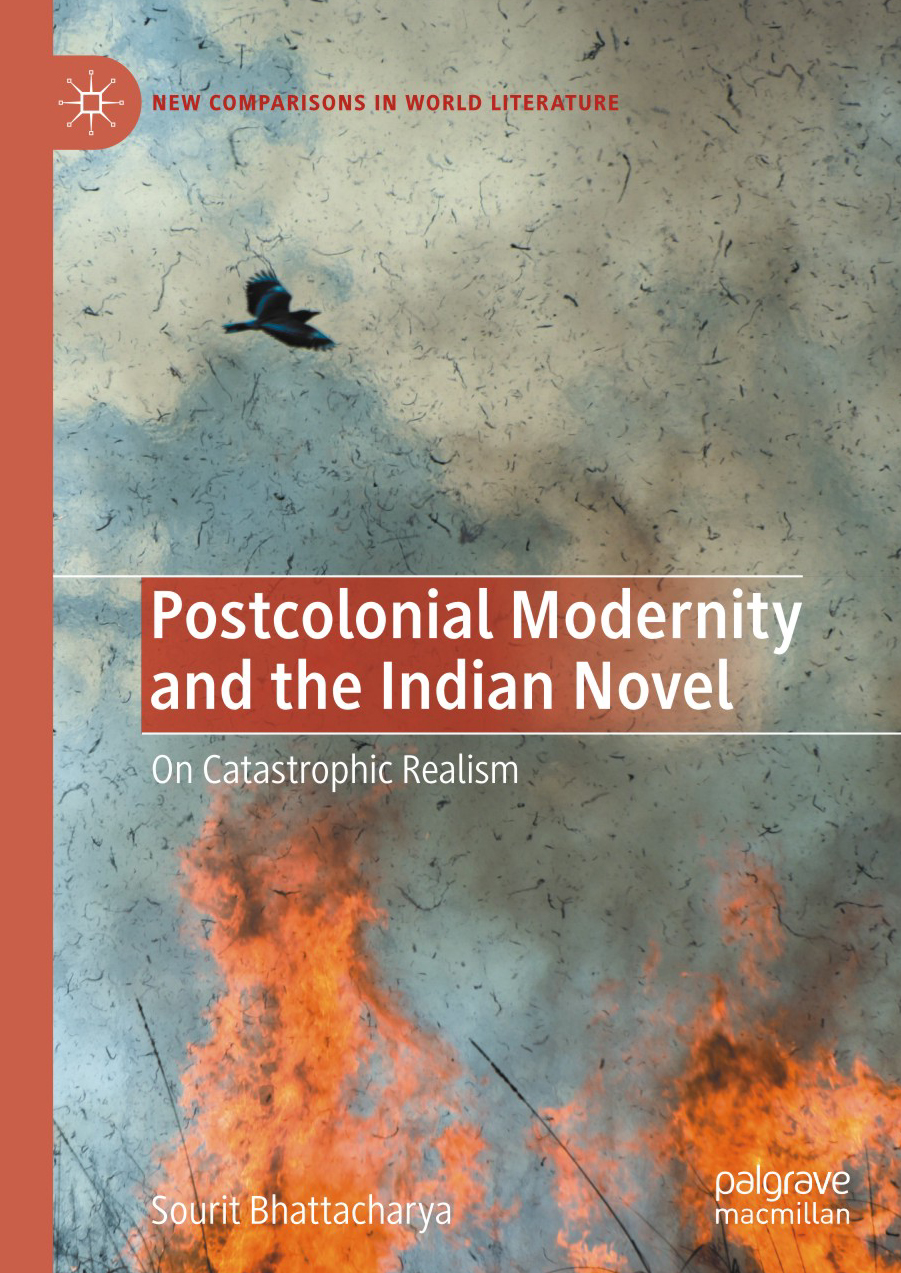
About the Book
This book argues that modernity in postcolonial India has been
synonymous with catastrophe and crisis. Focusing on the literary works
of the 1943 Bengal Famine, the 1967–72 Naxalbari Movement, and the
1975–77 Indian Emergency, it shows that there is a long-term,
colonially-engineered agrarian crisis enabling these catastrophic
events. Novelists such as Bhabani Bhattacharya, Mahasweta Devi, Salman
Rushdie, Rohinton Mistry, Nabarun Bhattacharya, and Nayantara Sahgal,
among others, have captured the relationship between the long-term
crisis and the catastrophic aspects of the events through different
aesthetic modalities within realism, ranging from analytical-affective,
critical realist, quest modes to apparently non-realist ones such as
metafictional, urban fantastic, magical realist, and others. These
realist modalities are together read here as postcolonial catastrophic
realism.
Contents
1. Modernity, Catastrophe, and Realism in the Postcolonial Indian Novel
2. Disaster and Realism: Novels of the 1943 Bengal Famine
3 Interrogating the Naxalbari Movement: Mahasweta Devi’s Quest Novels
4. The Aftermath of the Naxalbari Movement: Nabarun Bhattacharya’s Urban Fantastic Tales
5. Writing the Indian Emergency: Magical and Critical Realisms
6. Conclusion
About the Author / Editor
Sourit Bhattacharya is Lecturer in Postcolonial Studies at the University of Glasgow, Scotland. He is a co-editor of Nabarun Bhattacharya (2020) and Sanglap: Journal of Literary and Cultural Inquiry.