Jaipur • New Delhi • Bengaluru • Guwahati • Kolkata
Vinita Chandra
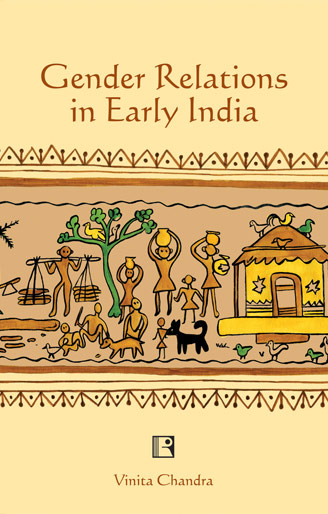
It rather argues that: (a) Gender relations were shaped and manifested differently across different regions and cultures in early India. (b) The entire dharmashastric discourse is aimed at the preservation and perpetuation of “Brahmanical patriarchy”, where maintenance of gender hierarchy was actually a corollary to the maintenance of varna hierarchy. The book explores important linkages between varna and gender in this context. (c) The dharmasastras may neither be considered as “foundational documents” nor can they be considered as “representative texts” of Indian tradition. The dharmasastras were only one of the many genres of literature produced in ‘ancient’ India. Though the texts presented the ‘ideal’, the ‘real’ was not always in consonance with it.
Providing informed and balanced analysis of extensive primary and secondary source material, the book will be a resource for anyone interested in studying women’s lives in India.
Vinita Chandra is Honorary Professor of Social Science at the International University of Humanities and Social Sciences, San Jose. Previously she has worked with Institute of Development Studies, Jaipur and has also taught history at Kanoria PG College, Jaipur. She was Guest Lecturer at Claremont Graduate University, Claremont, USA in October, 2009. She is also the author of Women in Manusmriti published by the Indian Council for Cultural Relations in 2006. Besides, she has also published papers in several international and national journals of repute.
Richard Sisson and Stanley Wolpert (eds)
Paramjit S. Judge
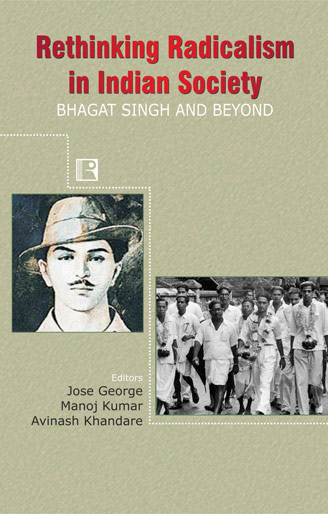
Jose George, Manoj Kumar and Avinash Khandare (Eds.)
Your cart is empty.