About the Book
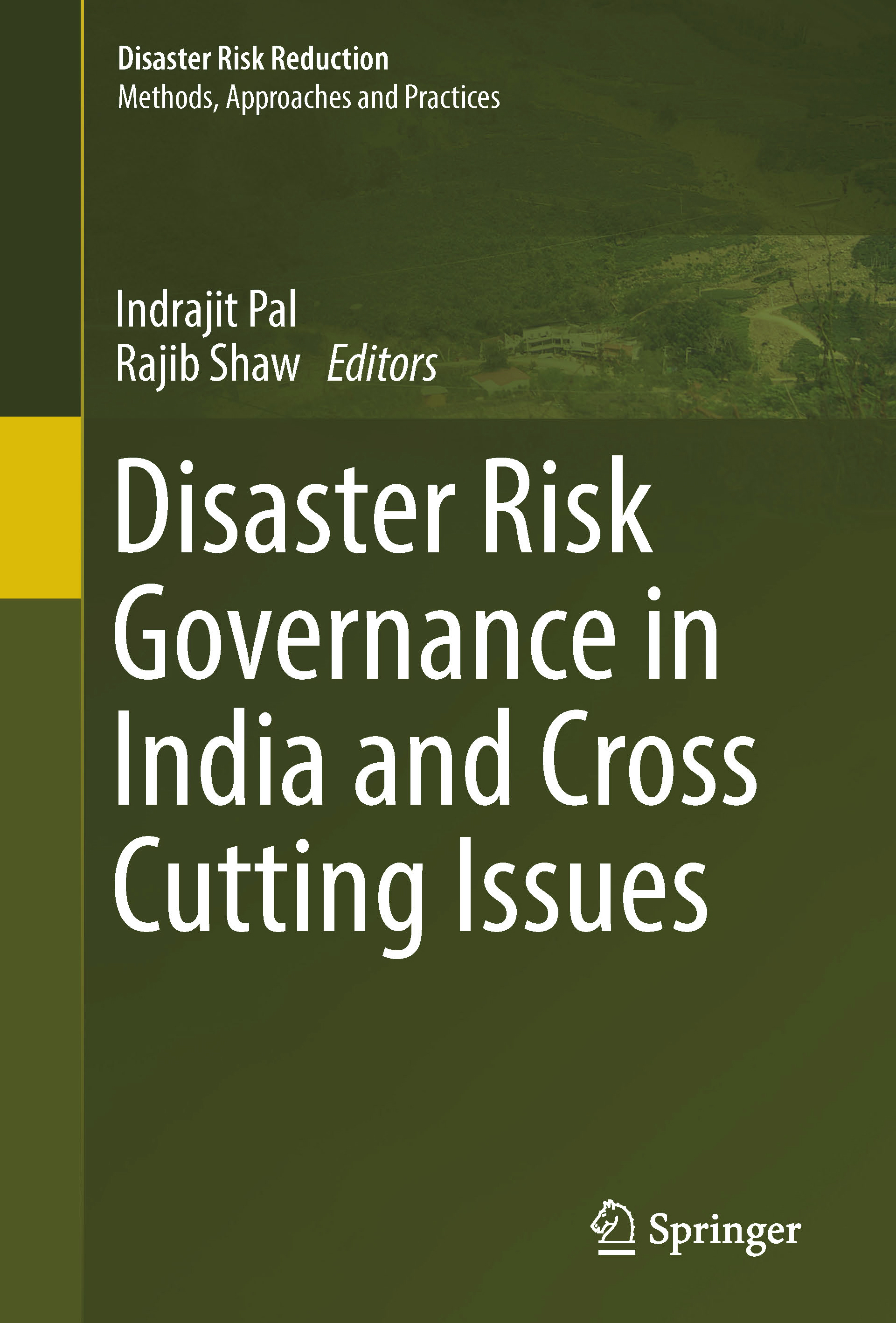
This book provides an analytical discussion of the status of disaster risk reduction and governance in an Indian context, drawing examples and lessons from the output of the national and regional level programs and projects and from other relevant experiences in the country. Different types of disasters faced by Indian states are covered, including geophysical and hydrometeorological hazards. The book incorporates and draws upon some of the key lessons from the pre-disaster phase through the disaster phase and finally to the post-disaster phase, thus establishing an effective framework in the form of key lessons learned.
The rich content of the book is based on contributions from various stakeholders, from academicians and practitioners to decision makers and nongovernment organizations related to disaster risk management systems in an Indian context. Special emphasis is given to analyzing field experiences from academic perspectives and pointing out key issues along with the relevance of risk governance of disaster risk reduction. The book works as a comprehensive reference in disaster risk governance for disaster managers in India and other countries.
The book has 19 chapters organized into four parts. Part I provides the outline and basics of disaster risk governance perspectives at the national level with supporting examples from a global point of view. Part II specifically emphasizes the detailed perspectives on risk governance at the regional and local levels. Part III is devoted to approaches and issues of disaster risk governance and development at various levels, stressing the practices and clear examples of disaster risk governance, policy options, institutional organization, risk-reduction strategies, and key lessons learned. Finally, Part IV highlights risk reduction and cross-cutting issues, focusing on risk mitigation and scientific intervention for disaster risk reduction.
Contents
Part I Overview and National Perspectives1. Disaster Governance and Its Relevance / Indrajit Pal and Rajib Shaw
2. Disaster Risk Reduction: The Indian Landscape / Mihir R. Bhatt
3. Disaster Governance and Legal Systems in India / Anil Kumar Gupta
4. National-Level Disaster Risk Governance for Rapid Response / Indrajit Pal and Nakul Kumar Tarun
5. Disaster Risk Reduction: Importance of Responsibilities of States / Narender Kumar
Part II Sub-national and Local Level-Perspectives6 Disaster Governance in West Bengal, India / Himadri Maitra
7. Multi-stakeholder Support in Disaster Risk Governance in India / Priya Namrata Topno
8. Disaster Risk Governance and Response Management for Flood: A Case Study of Assam, India / Indrajit Pal and Siddharth Singh
9. Lessons Learned from 16/17 June 2013 Disaster of Uttarakhand, India / Piyoosh Rautela
10. Uttarakhand Calamity: A Climate Revelation in the Bhagirathi River Valley Uttarakhand, India / Manish Mehta, Rakesh Bhambri, J. Perumal, Pradeep Srivastava, and Anil K. Gupta
Part III Disaster Risk Governance and Development11. Risk Governance for Improving Urban Disaster Risk Reduction / Chiranjiv Choudhary and Srinivasa Rajamani Neeli
12. Risk Governance Measures and Actions in Sundarbans Delta (India): A Holistic Analysis of Post-disaster Situations of Cyclone Aila / Indrajit Pal and Tuhin Ghosh
13. Good Governance to Achieve Resiliency and Sustainable Development / Chiranjiv Choudhary and Srinivasa Rajamani Neeli
14. A Participatory Approach to Enhance Disaster Risk Governance: The Case of Delhi, India / Sunil Prashar and Rajib Shaw
15. Impact of Natural Disasters on Schools in India:Current Scenario in Terms of Policies and Practices / Saswati Paik
Part IV Risk Reduction and Crosscutting Issues16. Enforcement of Building Construction Regulations in Urban Centers of India / Chandan Ghosh, Ranit Chatterjee, and Rajib Shaw
17. Catastrophic Insurance in South Asia: Scope in India / Subir Sen
18. Landslide Risk Assessment in Darjeeling Hills Using Multi-criteria Decision Support System: A Bayesian Network Approach / Debashis Mitra, Chandrani Bhandery, Anirban Mukhopadhyay, Abhra Chanda, and Sugata Hazra
19. Landslides and Erosion Control Measures by Vetiver System / Chandan Ghosh and Shantanoo Bhattacharya
About the Author / Editor
Indrajit Pal is an assistant professor in Disaster Preparedness, Mitigation and Management, Asian Institute of Technology, Thailand. He served as a faculty member at the Centre for Disaster Management at Lal Bahadur Shastri National Academy of Administration, Mussoorie, India (a premier national institute for training Indian administrative services officers) for more than 8 years. Dr. Pal holds a Ph.D. in Seismotectonic and Earthquake Hazard Assessment, and two master's degrees, one in applied geology and another in sociology with a specialization in urban sociology. He has more than 14 years of experience in teaching, training, research, curriculum development, advocacy, consultancy primarily focused on disaster governance, risk management (DRM), incident command systems, disaster risk eduction (DRR), hazard and risk assessment, GIS and remote sensing in DRM, climate change adaptation, and DRM. Dr. Pal is working with international organizations on various aspects of DRR and supervising doctoral and master's degree research students in the field of DRM. He is a reviewer for reputed international journals and has published a number of books and research articles in refereed national and international journals. In 2017 Dr. Pal was been recognized as an IRDR Young Scientist by Integrated Research on Disaster Risk, Beijing, China.
Rajib Shaw is a professor of Keio University at its Shonan Fujisawa Campus in Japan. Earlier, he was the executive director of Integrated Research on Disaster Risk (IRDR), a decade-long research program co-sponsored by the International Council for Science (ICSU), the International Social Science Council (ISSC), and the United Nations International Strategy for Disaster Reduction (UNISDR). He is the co-chair of the UNISDR Asia Science Technology Academic Advisory Group (ASTAAG). Dr. Shaw is also a senior fellow of the Institute of Global Environmental Strategies (IGES) Japan and the chairperson of SEEDS Asia, a Japanese NGO. Previously, he was a professor in the Graduate School of Global Environmental Studies of Kyoto University, Japan. His expertise includes community-based disaster risk management, climate change adaptation, urban risk management, and disaster and environmental education. He has published more than 40 books and more than 300 academic papers and book chapters.