
Jaipur • New Delhi • Bengaluru • Guwahati • Kolkata
Franco Archibugi
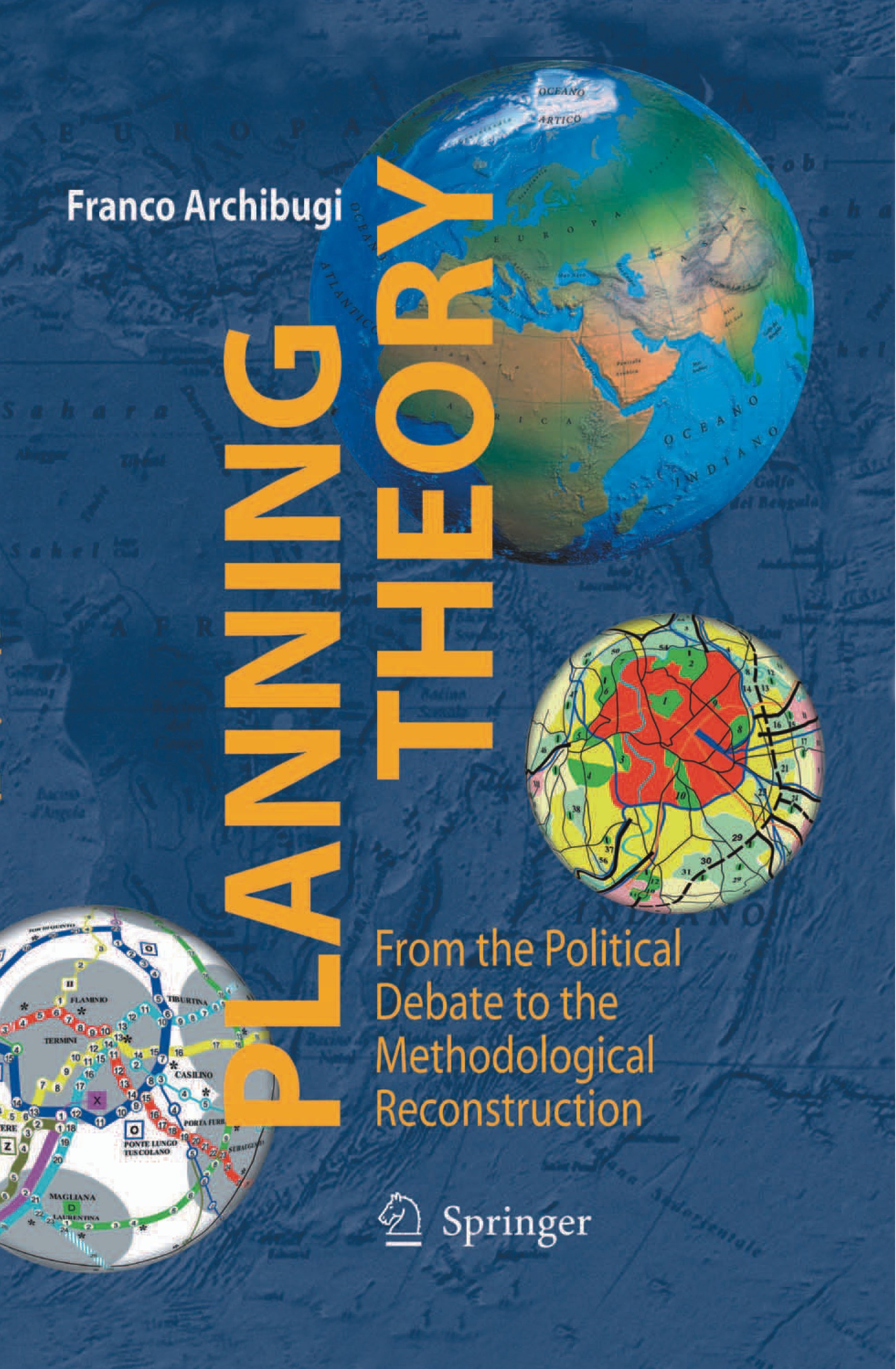
Planning Theory expresses a sound unease about the direction taken by the current analysis and criticism of planning experiences, both in the field of economics and in urban and regional planning.
Instead of seriously revising the technical and scientific shortcomings marking the various problems encountered in the planning experience in both fields, academic debates and reflection have instead led to a kind of political interpretation. On the basis of the hopelessness of improving the governance of managerial and political planning initiatives, planning theory has been reduced to a generic sociological debate on planning itself; a debate that freezes planning as a permanently declining engagement.
To oppose this, the present book aims to identify the essential guidelines of a re-launch of planning processes and techniques, configuring a kind of neo-discipline, called ‘planology’ by the author, which builds upon a multi-disciplinary integration (never seen and experimented with until now) of economic, environmental, and sociological approaches, a crucial element missing in previous unsuccessful planning attempts.
PlanningTheory: Reconstruction or Requiem?
In Search of Integration:The Past Negative Experience
Towards a New Unified Discipline of Planning
The First Routes of the New Discipline
Some Integrative Topics of the New Planning Discipline
Planning Science: Basic Postulates and Logical Framework for Reference
The Future of National Planning Systems: Some New Steps
Planning and Plan Evaluation: SomeWell-Known and Often Neglected Pitfalls
Conclusions
Professor of Planning (in several Italian Universities, and
lastly at the Postgraduate School of Public Administration, Rome; President of
the Planning Studies Centre, Rome). He has been consultant of many international institutions
(UNDP, UNESCO, UN-ECE, UNEP, OECD, European Union, Council of Europe and
others) and of the Italian Government. Author of some books in economics and planning, which have
had international audience within the scientific community, like The
Associative Economy (Macmillan, 2000), The Ecological City (Ashgate, 1997),
Economy and Ecology (co-ed., Kluwer, 1992), and others.

David B. Grusky and Szonja Szel

Gerard McCann And Stephen McCloskey (Eds)
Your cart is empty.