About the Book
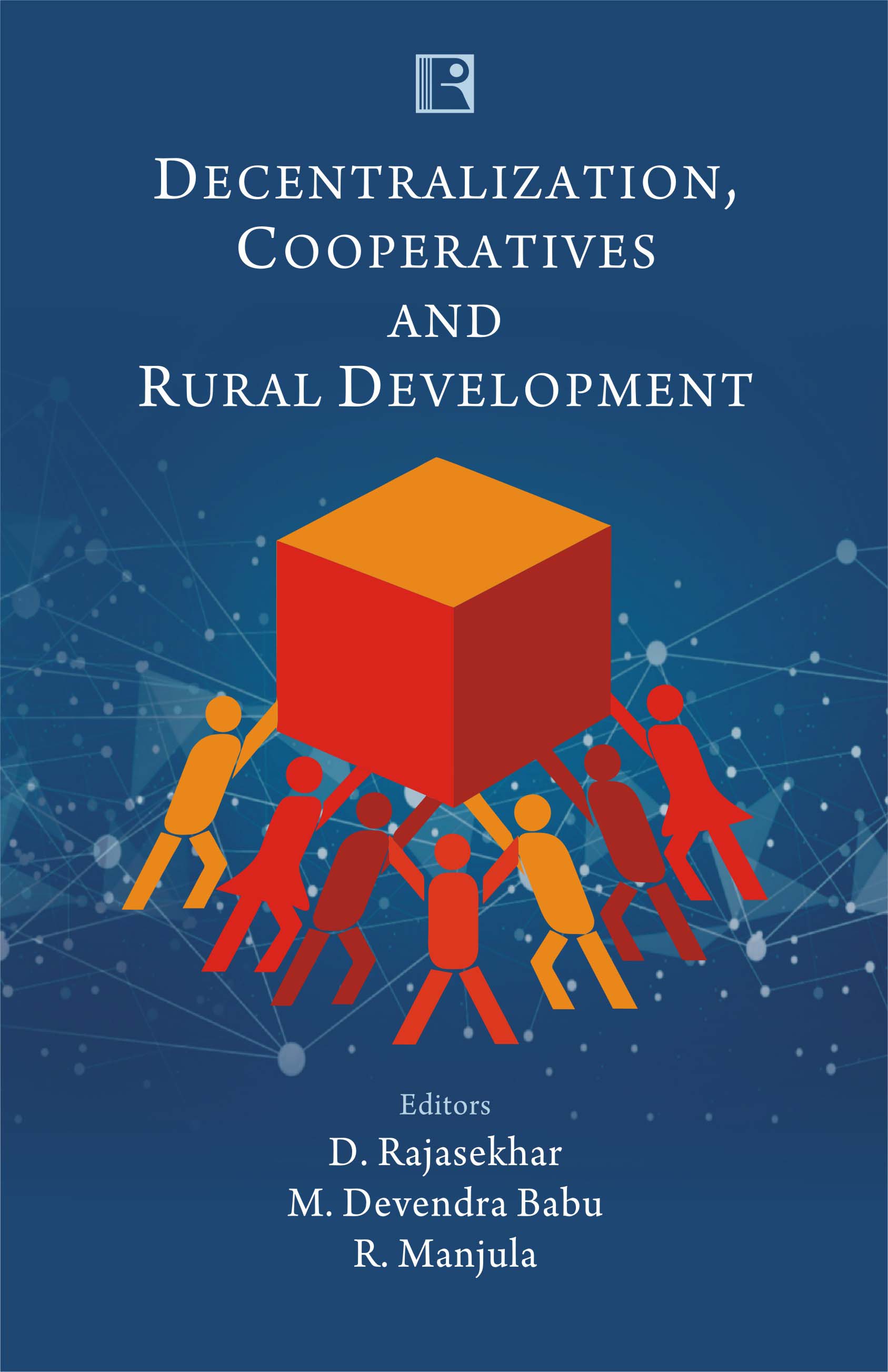
Institutions improve access to qualitative services and are therefore considered to be important for rural development. In post-independence India, panchayats and cooperatives were entrusted with the responsibility of social and economic development at the village level. The vision was that these two institutions must function harmoniously and in a complementary manner for the speedy rural development.
Subsequently, these two rural institutions have gone in different ways. In view of the worldwide recognition for decentralization and the role that decentralized institutions can play in rural development, several countries have embarked the path of decentralization and development approach to rural development. The strengthening of cooperatives for providing economic services has also been emphasised. It is in this context that this volume addresses the following questions: Are these two institutions collaborating with each other at the ground level? If yes, in what areas? If not, what are the potential areas of collaboration? What constraints exist in this collaboration?
The papers in this volume explore the links between panchayats and cooperatives for rural development. While doing so, the papers discuss the promise of decentralization by taking Panchayat Raj Institutions in India as an example, and identify best practices that could be adopted in the South Asian countries for cooperative and rural development. Specifically, the papers discuss the evolution of panchayats and cooperatives in India, their role in rural development, and their problems and prospects. The way forward in developing an interface between these two institutions for rural development is also discussed. This volume will be of interest to academicians, students and policy makers.
Contents
1 Introduction: Towards an Interface between Panchayats and Cooperatives / D. Rajasekhar, M. Devendra Babu and R. Manjula
2 Panchayati Raj Movement in India: Some Aspects / B.S. Bhargava
3 Panchayati Raj Institutions and Cooperatives / T. Paranjothi
4 Characteristic Features of Local Governments: Derived from 73rd and 74th Amendment Acts of 1992 on Panchayats and Municipalities / Abdul Aziz
5 Political and Administrative Decentralization in India: Vision and Reality / N. Sivanna and Nayakara Veeresha
6 Myth or Reality of Decentralized Planning: The Case of India / M. Devendra Babu
7 Fiscal Decentralization to Rural Local Governments in India: The Position in the Post-73rd Amendment Period / M. Devendra Babu
8 Role of Panchayats in the Delivery of Drinking Water and Sanitation Services / D. Rajasekhar
9 Public Works for Rural Development: Role of Gram Panchayats and Cooperatives / R. Manjula
10 Panchayats, Cooperatives and Agriculture Sector: The Institutional and Development Linkages / M. Devendra Babu
11 Gram Panchayats, Cooperatives and Micro-Finance / D. Rajasekhar
12 Panchayat Raj Institutions and Cooperative Business Model for Sustainable Development / D. Ravi
About the Author / Editor
D. Rajasekhar is HAG Professor in Economics at the Centre for Decentralisation and Development, Institute for Social and Economic Change (ISEC), Bengaluru. He was Visiting Scholar at the Universities of Oxford, Melbourne, Sussex and at the Centre for Development Research, Copenhagen. He has worked extensively on decentralization, social protection and microfinance, and served in policy bodies constituted by the government. He has published 20 books, monographs and 70 articles in national and international journals. He is currently collaborating with researchers from the London School of Economics, and the universities of Bristol, Melbourne and Japan in research relating to decentralization and poverty reduction, delivery of public services and social protection.
M. Devendra Babu is Honorary Professor at Karnataka State Rural Development and Panchayat Raj University, Gadag, Karnataka, and formerly Professor at ISEC. His areas of interest are fiscal decentralization, local planning and public economics. He has published widely on different aspects of decentralization.
R. Manjula is Assistant Professor, Centre for Decentralisation and Development, ISEC, Bengaluru. She was an Academic Visitor at the Department of Economics, University of Oxford. She has co-authored books and research papers in national and international journals. She has worked on several research projects, covering themes of decentralization, child labour, social security, health insurance, public works programme and public service delivery, and collaborating with researchers from UK and Japan.